Mobile & optical sensing
Turn camera signals into research data.
Smartphones, controlled illumination, and imaging components support experiments in non-invasive physiological monitoring.
Explore dDream
A working home for mobile health research. Explore our medical devices, wearables, EEG headsets, and the spaces and experimental tools behind our work at Marquette University.
Katharine Reed Cudahy Hall · Milwaukee, Wisconsin
From a signal to a working system.
Explore our main equipment areas, from physiological sensing to custom hardware. Open a card to see the devices and tools.
Browse all equipment
The lab has three EEG headsets for experimental brain-signal acquisition. The photo in “Inside the lab” shows a headset with live signal visualization.
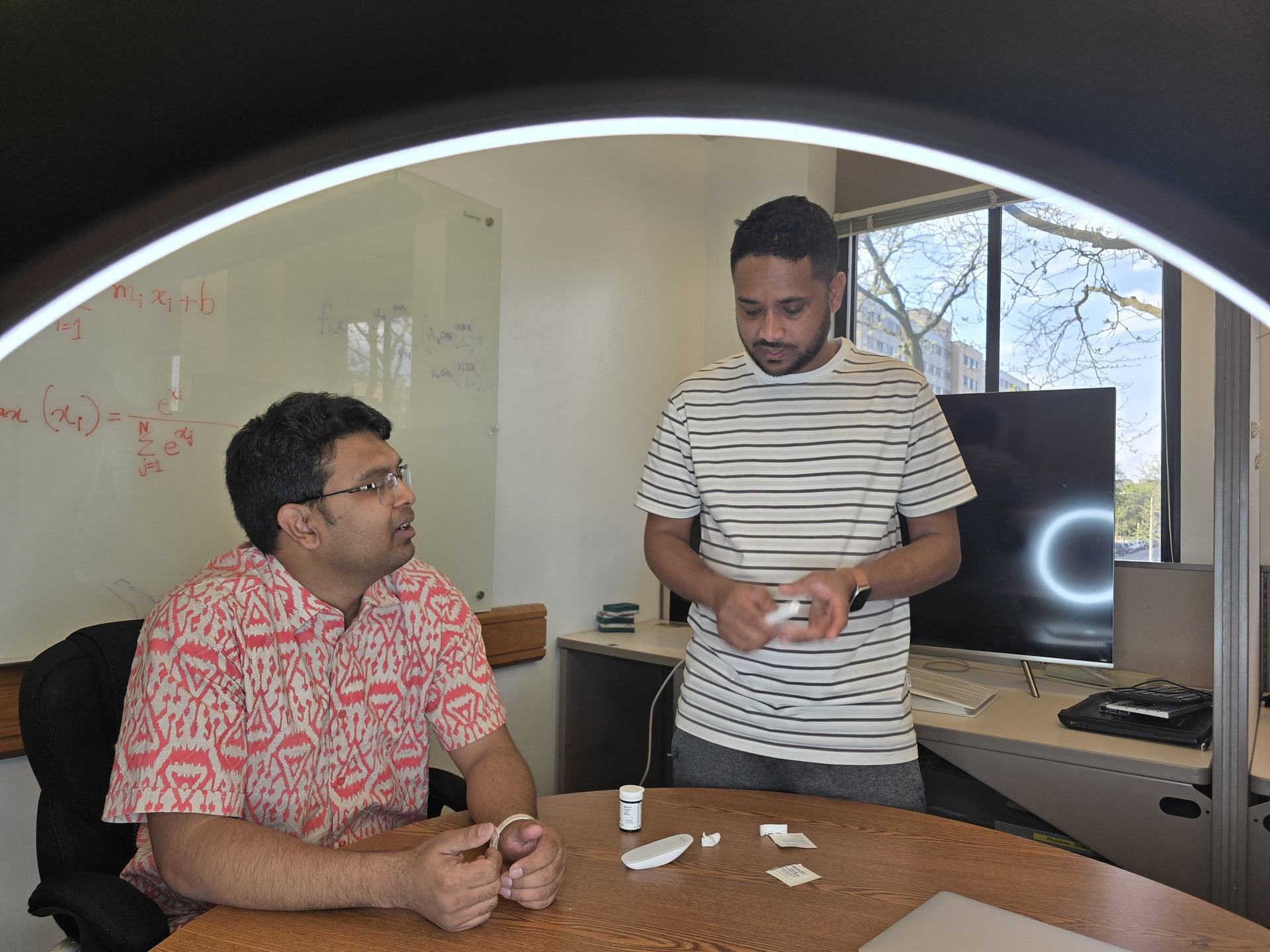
Hemoglobin measurement devices and blood-pressure monitors complement a Masimo pulse oximeter and an iHealth glucometer for physiological research. Device selection and measurement procedures depend on the study.
Smart rings, an H10 heart-rate monitor, and a respiration belt support wearable and breathing-related sensing experiments. Models and sensing capabilities vary by device.
The smartphone register includes six Google Pixel 9 Pro entries and one Pixel 2 entry for mobile sensing experiments and application testing.
Basler MED ace 2.3 MP 164 color camera; Dino-Lite AF7515-N2UT digital microscope; Nikon CFI Plan Achromat 10× objective; 200 mm tube lens; 50:50 beam splitter cube; linear polarizer films. Ring-light and 530 nm LED illumination are supported by an LED driver, power supply, and cables. Lens tubes, couplers, C-mount/SM1/SM2/M25/M38 adapters, a Z-axis translation stage, and immersion oil complete the optical toolkit.
An infrasound capture device adds low-frequency acoustic sensing to the lab’s experimental toolkit.
The lab’s photographed Bambu Lab P1S printer supports hands-on hardware prototyping, including housings and fixtures for experimental sensing setups.
Arduino Nano IoT board; breadboard; inductor set; WBC LED circuit board; phone-to-LED circuit cables; multimeter; LCR multimeter; screwdriver set; AA battery and battery holders. Bar and neodymium block magnets support experimental hardware work.
Try a different term or browse all equipment.
Contact the lab to discuss equipment access and the right setup for your research.
Tools and spaces that bring our research to life.
Mobile & optical sensing
Smartphones, controlled illumination, and imaging components support experiments in non-invasive physiological monitoring.
Explore dDream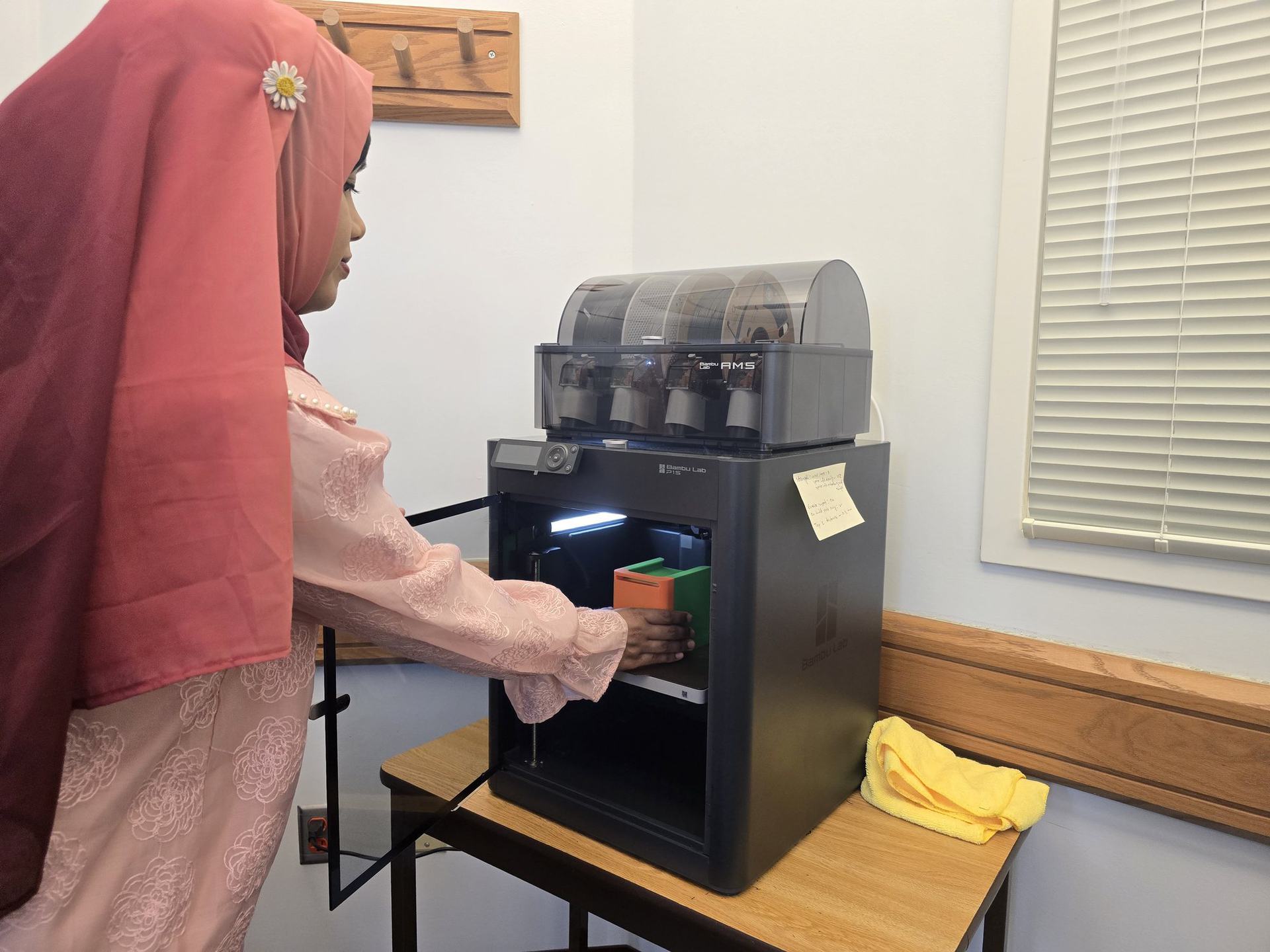
Hardware prototyping
A Bambu Lab 3D printer and electronics tools help researchers develop sensor housings, device fixtures, and experimental prototypes.
See prototyping tools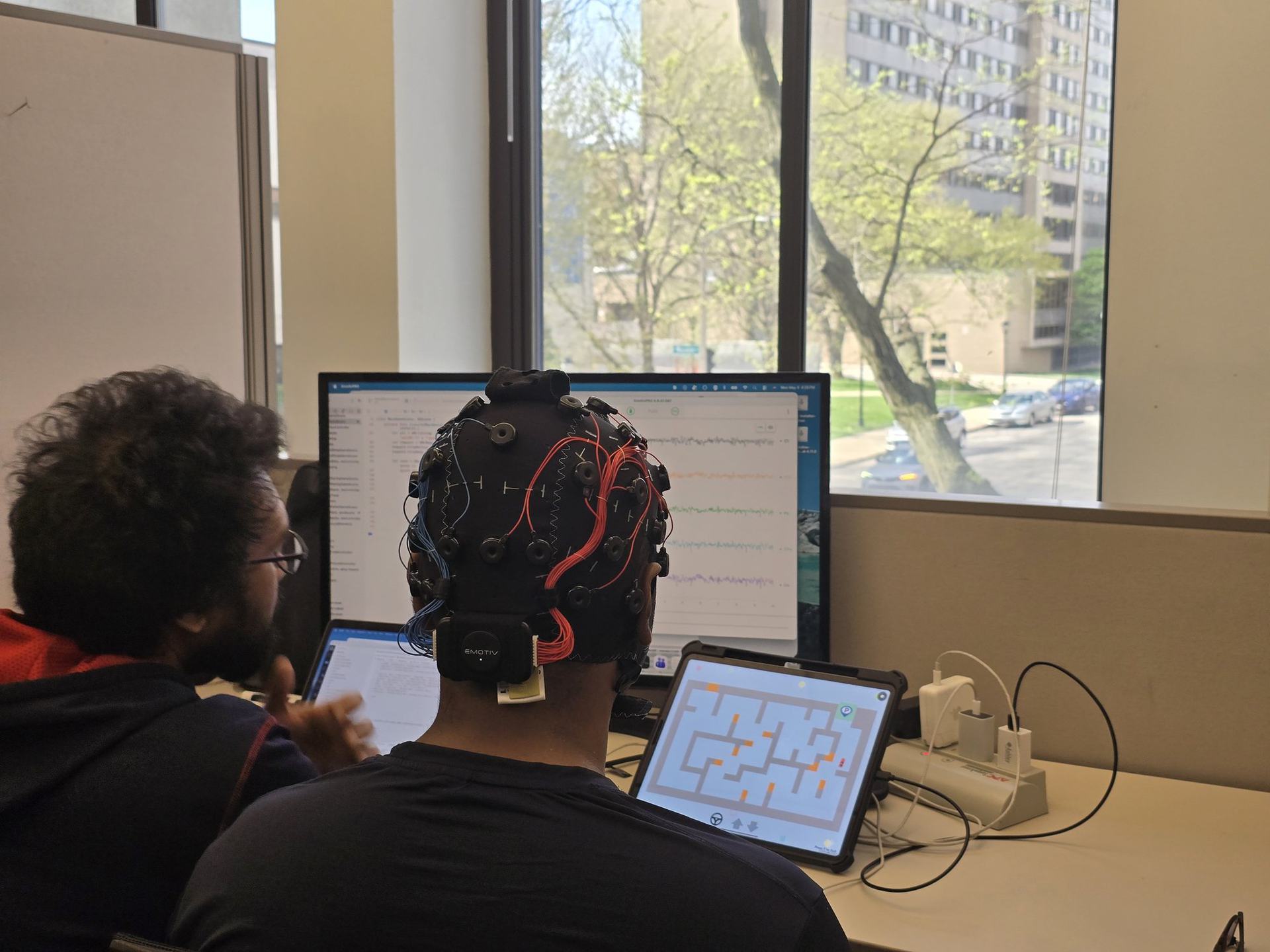
Brain–computer interfaces
EEG headsets support brain-signal acquisition and assistive technology experiments, alongside the real-time visualization setup shown here.
Explore our research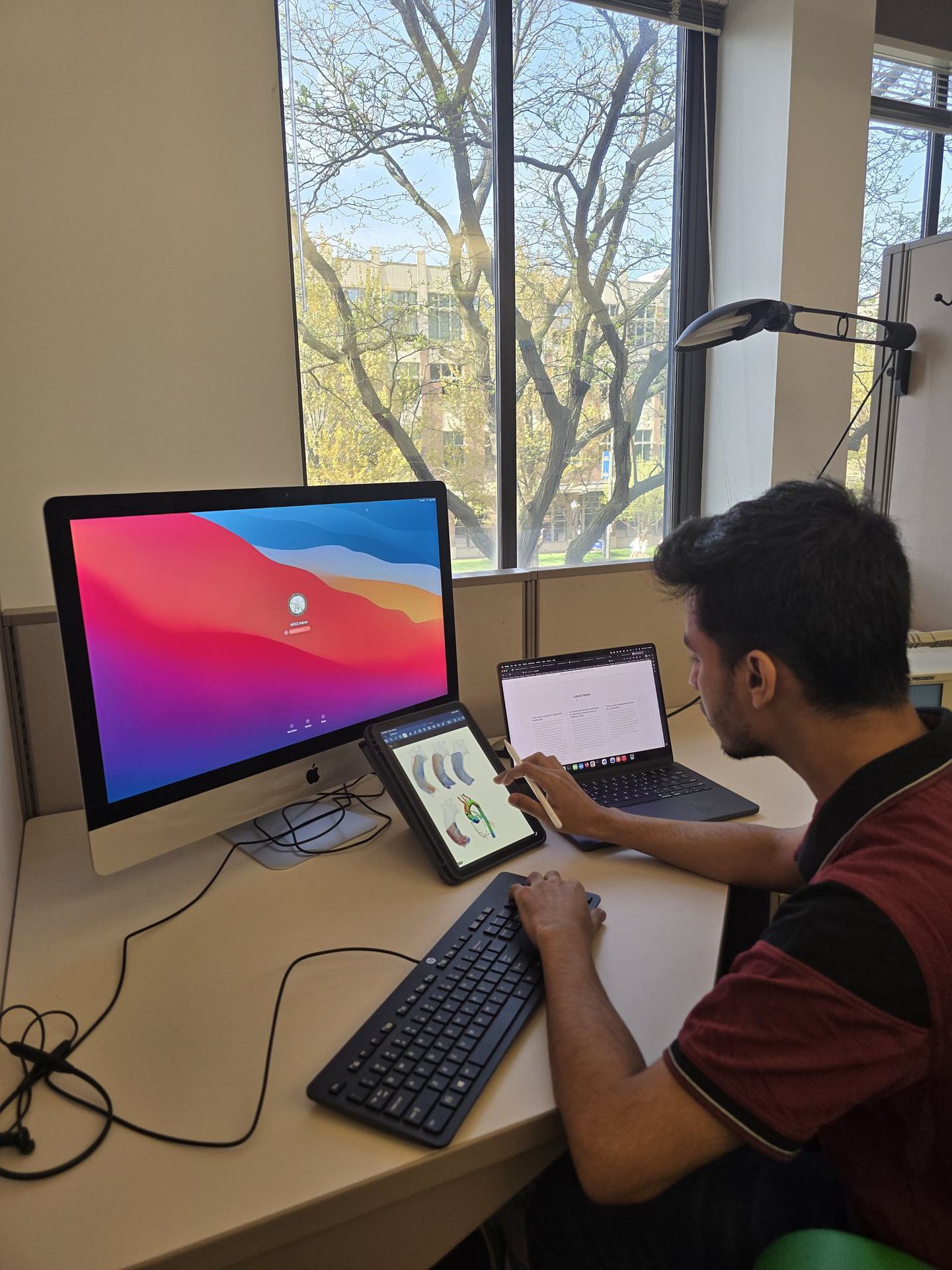
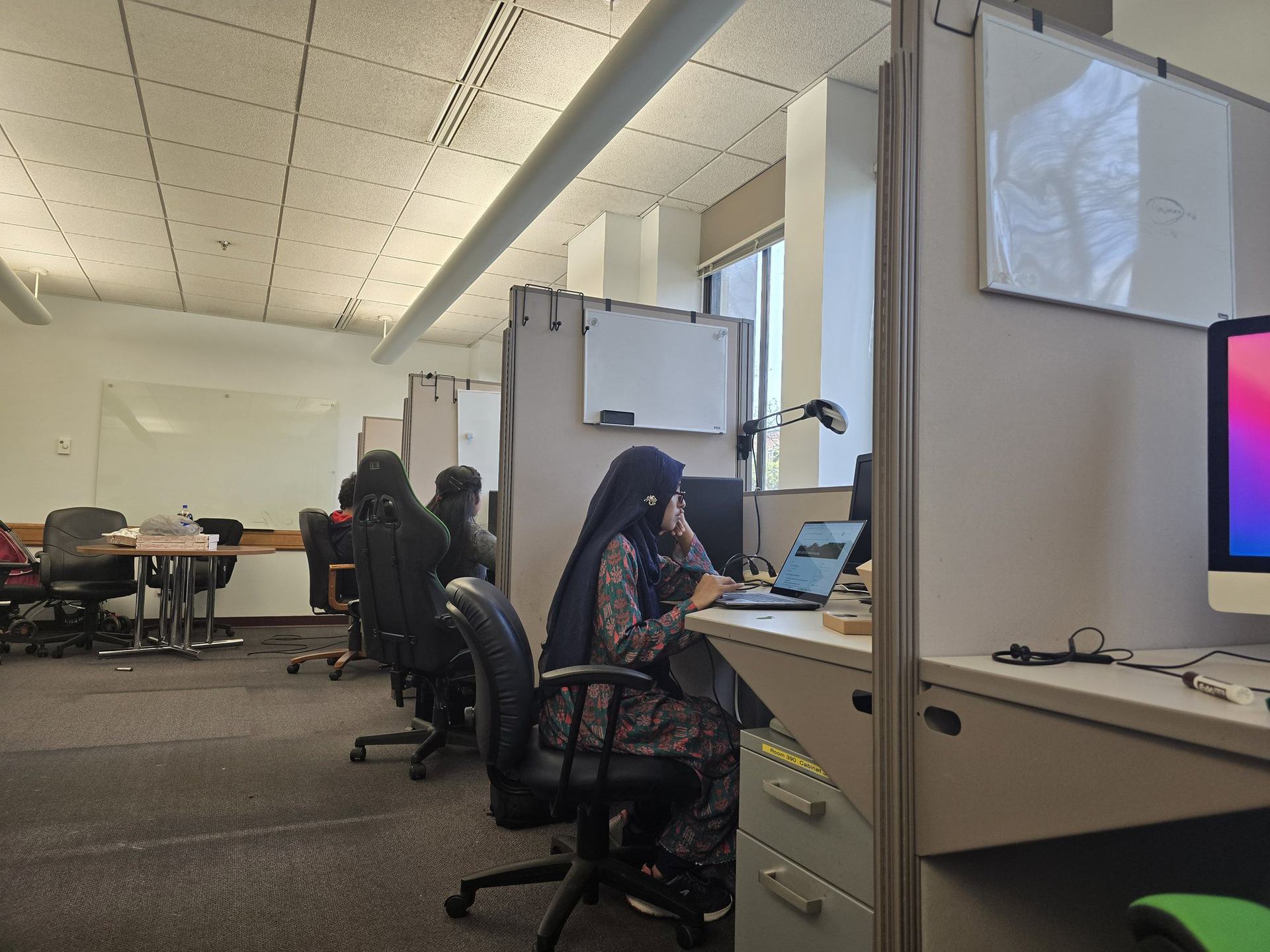
Computing & collaboration
Shared workstations, laptops, tablets, and whiteboard discussions support software development, signal processing, and collaborative research.
Meet the researchersInterested in collaborating, visiting the lab, or using equipment for a project? Tell us about your work so we can discuss the right tools and setup.
Contact the lab